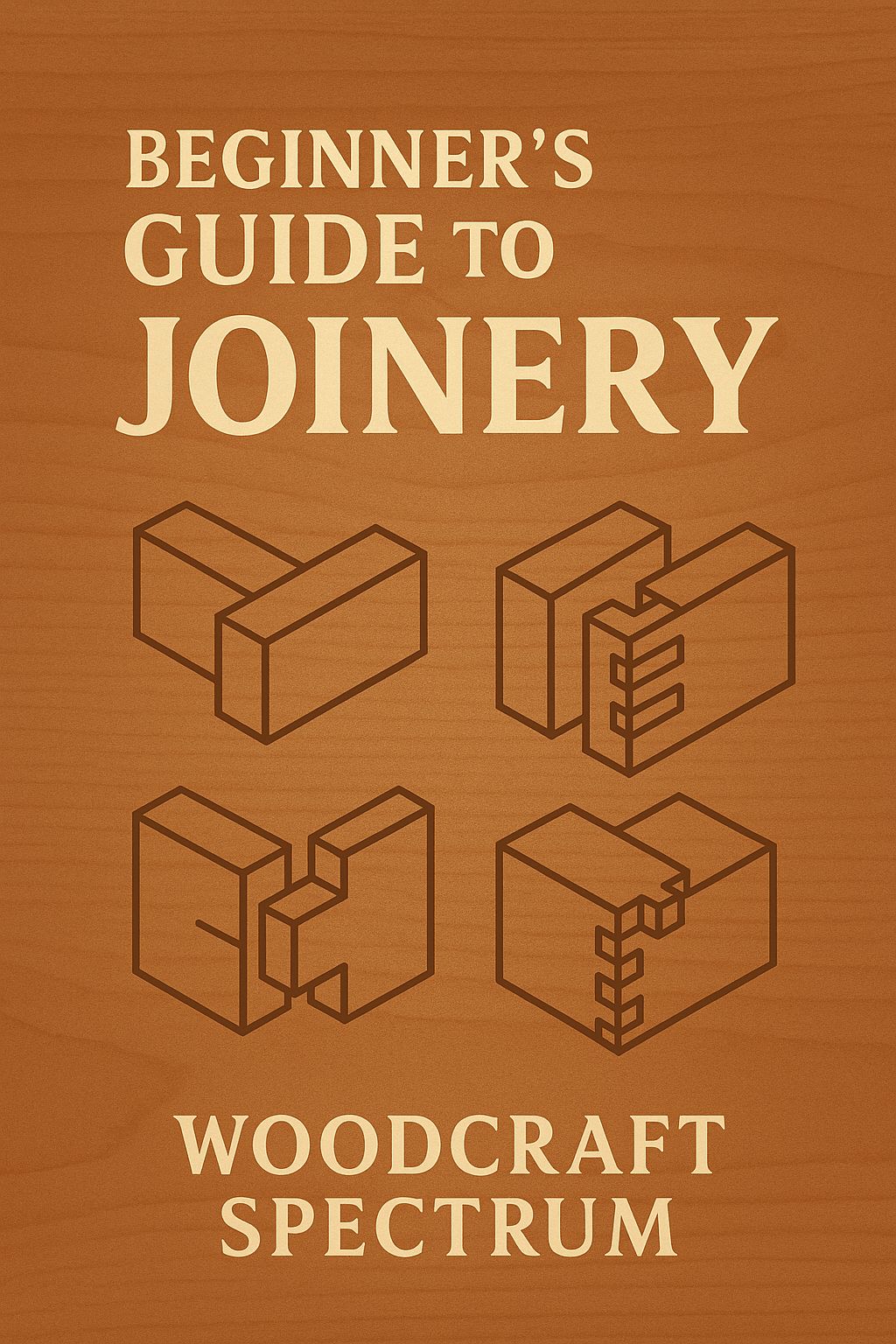
Why Joinery Matters
Joinery is how separate pieces of wood are connected into a stable, functional structure. Good joinery is the difference between a chair that lasts for decades and one that wobbles after a month. Learning joinery also helps you work without excessive fasteners, relying on craftsmanship instead of screws or nails.Beginners Guide to Joinery With Essential Tools for Joinery
You don’t need every tool in the shop to get started with joinery. Focus on these essentials:- Saws: Handsaw, dovetail saw, or table saw.
- Chisels: For mortises, fine fitting, and cleaning joints.
- Squares & Measuring Tools: Precision is critical.
- Clamps: To hold pieces securely while gluing.
- Router or Jig: Helpful for box, finger, or dovetail joints.
Butt Joints
Definition: The simplest joint, made by joining two pieces of wood end-to-end or edge-to-face. When to use: Basic framing, shop jigs, or temporary structures. How to make: Square the ends, apply glue, and reinforce with screws or nails. For added strength, consider dowels or biscuits.Miter Joints
Definition: Two pieces cut at an angle (often 45°) that meet to form a corner. When to use: Picture frames, boxes, and decorative trim. Tips: Clamp tightly, use a shooting board for accuracy, and reinforce with splines or biscuits.Dovetail Joints
Definition: Interlocking pins and tails that resist pulling apart. When to use: Drawers, boxes, fine furniture. How to cut: Traditionally by hand with a dovetail saw and chisels, or using a router jig for precision. Dovetails are a hallmark of craftsmanship, admired for both strength and beauty.Mortise and Tenon Joints
Definition: A projecting tenon fits snugly into a mortise hole. When to use: Chairs, tables, doors, and other load-bearing furniture. Tips: Cut mortises first, then fit tenons to them. Ensure a snug but not forced fit. Glue and clamp for maximum strength.Box Joints
Definition: Interlocking rectangular “fingers” cut into each board end. When to use: Boxes, chests, cabinetry. Tips: Use a router jig or table saw jig. Dry-fit before gluing to avoid misalignment.Lap Joints
Definition: Two pieces overlap partially, sharing load. When to use: Frames, tables, and simple furniture. Tips: Use glue and clamps. Reinforce with dowels or screws if needed.Finger Joints
Definition: Interlocking “fingers” that maximize gluing surface. When to use: Longer boards, tabletops, or panel construction. Tips: Router jigs make this easier. Ensure glue coverage on all surfaces.Dados and Rabbets
Definition: Grooves or recesses cut into a board to accept another piece. When to use: Cabinet backs, shelving, drawer bottoms. Tips: Cut with a router, dado blade, or chisel. Dry-fit before gluing.Beginners Guide to Joinery With Tips for Joinery Success
- Always measure twice and cut once.
- Practice on scrap before committing to project wood.
- Sharp tools = safe and accurate work.
- Use jigs to improve precision and repeatability.
- Be patient — strong joinery takes time.
Joinery FAQ
Which joint should I learn first as a beginner?
Start with butt and miter joints. They are simple and build the foundation for advanced techniques like dovetails.Do I need power tools to make joinery?
No. While routers and table saws help, many joints can be made with hand tools like chisels and saws.What’s the strongest woodworking joint?
Mortise and tenon joints are considered the strongest for load-bearing structures, while dovetails are strongest against pulling apart.Can beginners cut dovetails?
Yes, with practice. Use a simple jig or start by hand on scrap wood to build confidence.